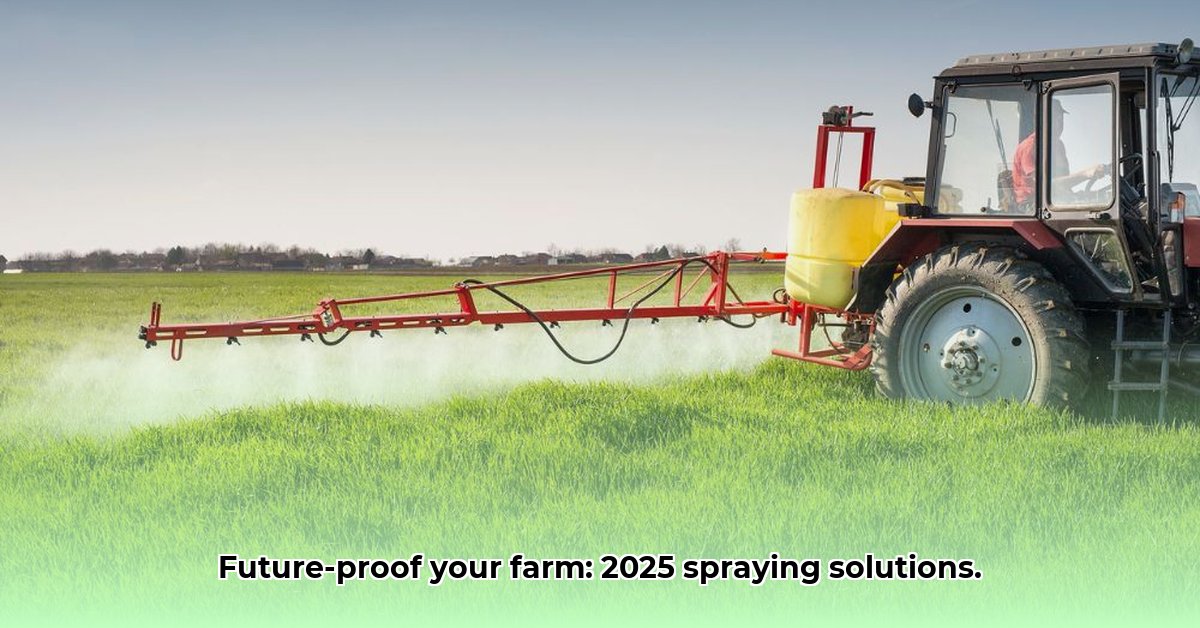
Spraying Tractor Efficiency: A 2025 Perspective
Precision spraying technology has revolutionized agriculture, offering farmers a path toward increased efficiency and environmental sustainability. This shift from basic spraying methods to sophisticated, data-driven approaches is transforming how crops are treated and managed, leading to significant improvements in yields and reduced environmental impact. But how can farmers, manufacturers, policymakers, and researchers best navigate this rapidly evolving landscape? For more information on spray rigs, check out this helpful resource.
How much has herbicide use been reduced by targeted AI spraying? Studies show significant reductions, although more research is needed to quantify this across different crop types and weed varieties.
The Evolution of Precision Spraying: From Simple to Smart
Older spraying tractors often lacked precision, leading to uneven coverage and chemical waste. Modern machines, however, boast significantly larger tank capacities (some exceeding thousands of gallons), reducing the frequency of refills. Furthermore, features such as automatic height control and individual nozzle adjustments ensure even spray distribution across the field. GPS and automated guidance systems eliminate overlaps and gaps, maximizing efficiency and minimizing waste. Reduced-drift technologies, including specialized sprayer hoods and improved droplet size control, minimize environmental impact.
Choosing the right sprayer—pull-type, self-propelled, or mounted—depends on farm size and operational needs. Self-propelled units offer greater independence and control, while pull-type and mounted options are often more cost-effective for smaller operations.
AI and the Future of Spraying: Smarter Than Ever
Artificial intelligence (AI) is rapidly changing precision spraying. Systems like John Deere's See & Spray utilize cameras and AI to identify weeds, applying herbicides only where necessary. This targeted approach drastically reduces herbicide use while protecting the environment. However, Dr. Anya Sharma, Agricultural Engineer at the University of California, Davis, cautions, "While promising, we need more long-term data on cost savings and environmental effects across diverse conditions."
The scalability of AI-powered systems is another critical factor. Can smaller farms afford and effectively utilize this technology? Addressing this question is crucial for ensuring equitable access to sustainable farming practices.
Balancing Precision and Sustainability: The Bigger Picture
While precision spraying dramatically reduces chemical drift and overuse, it doesn't eliminate the environmental impact of pesticides entirely. Therefore, a significant focus lies in transitioning towards biopesticides and other environmentally friendly alternatives. True sustainability requires ongoing innovation and a holistic approach.
How to Choose the Best Precision Sprayer for Small Sustainable Farms
Key Takeaways:
- Precision sprayers significantly reduce chemical use, increasing sustainability and profitability.
- Sprayer selection depends on farm size, crop types, and budget. Choosing the right sprayer is crucial for maximizing ROI (Return on Investment).
- Key features include tank capacity, boom width, nozzle type, GPS guidance, and variable rate technology (VRT).
- Investing in precision spraying enhances efficiency and profitability, leading to better bottom line results.
Understanding Your Needs: A Foundation for Selection
Before choosing a sprayer, assess your farm's characteristics: crop types, acreage, and budget constraints. These factors directly influence your needs.
Key Features to Consider
- Tank Capacity: Larger tanks reduce refill frequency, boosting efficiency.
- Boom Width: Wider booms cover more ground faster but can impact maneuverability on smaller farms.
- Nozzle Type: Different nozzles provide varying spray patterns; choose those optimal for your crops and conditions.
- GPS Guidance and Auto-Steer: These improve accuracy, minimizing waste.
- Variable Rate Technology (VRT): This allows for tailored chemical application, optimizing usage and reducing costs.
Choosing Your Sprayer: A Step-by-Step Guide
- Define Requirements: Analyze your farm's needs and priorities. Determine your budget. How much can you realistically invest?
- Research Options: Explore available brands and models, read reviews, and compare specifications. Don't be afraid to ask questions!
- Consider Technological Advancements: Assess benefits of GPS guidance, auto-steer, and VRT.
- Test Before Buying (If Possible): A field test allows you to see the sprayer's performance in your conditions.
Weighing the Pros and Cons
| Feature | Pros | Cons |
|---|---|---|
| Precision Spraying | Reduced chemical use, improved yield, better environmental stewardship. | Higher upfront cost, potential learning curve. |
| GPS Guidance | Increased accuracy, reduced overlaps, minimized chemical waste. | Requires initial investment in technology and training. |
| VRT | Optimized chemical application, reduced costs, environmental benefits. | Can be complex to set up and operate correctly, might need specialized software. |
Future Trends in Precision Spraying
The future of precision spraying involves increased AI and machine learning integration, leading to greater automation, reduced chemical use, and enhanced data analysis capabilities. These innovations will further refine sustainable farming practices. What are some of the most promising innovations on the horizon? Further research into AI-powered weed detection systems, and continued refinement of VRT technology, are expected to become key areas of focus in the agricultural industry.